Reading a sediment core without hiding the joins
A fictional field note about provenance, uncertainty and layered climate records.
content/posts/2026/reading-a-core.md — front matter: date2026-02-12, filed under Research practice, Field notes, Open data. Rendered through the collection's own Markdown pipeline; 1 headings.
The register reads this same file: a post is announced on the date its own front matter carries, so the announcement cannot drift from the post.
A sediment core looks continuous from a distance. Up close, it is a chain of decisions: where to sample, which proxy to trust, how to align depths with time, and what to do when two signals disagree.
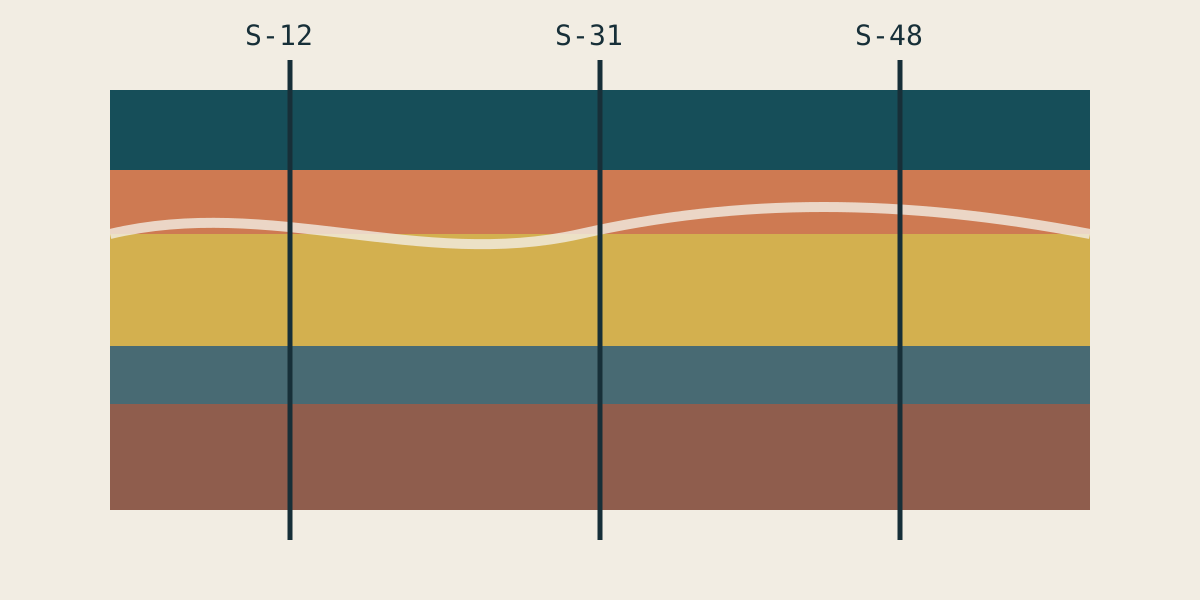
For our fictional Pukaki Rise record, we keep those decisions beside the measurements. Each published value can be traced to a sample, each sample to an interval, and each interval to the chronology version used to interpret it.
Keep disagreement visible
Agreement between proxies is evidence. Disagreement is also evidence. A useful record preserves both, along with the judgement that connects them to a claim. That is slower than flattening everything into one confident line, and much easier to audit later.